RESEARCH EXPERIMENT
Grokking & Mechanistic Interpretability
Investigating delayed generalization in Transformers trained on modular arithmetic, and whether their learned computations follow a Fourier-based algorithm.
OCT 2026Repository
Mathematics student / BITS Goa
Mathematics. Deep learning.
Quantum computing.
Exploring interesting systems
from first principles.
I’m Harliv Singh, a mathematics student at BITS Pilani, Goa. My interests span computational mathematics and science, quantum computing, and artificial intelligence. I build and study mathematical and computational models to understand how complex systems work, with a focus on careful implementation and first-principles reasoning.
Research with qBITS, the quantum computing club at BITS Goa.
Quantum simulation of the Schwinger effect to investigate theoretical and computational approaches towards identifying signatures relevant to its experimental observation.
RESEARCH EXPERIMENT
Investigating delayed generalization in Transformers trained on modular arithmetic, and whether their learned computations follow a Fourier-based algorithm.
REPRODUCIBLE CRYPTANALYSIS
SageMath experiments testing attacks on the prime-field masking layer of a pairing-based scheme.
IMPLEMENTATION STUDY
A decoder-only character-level Transformer implemented from scratch in NumPy, including tokenization, multi-head self-attention, multiple Transformer blocks, manual backpropagation, and cross-entropy loss without automatic differentiation.
Mar – Jul 2026Club Project
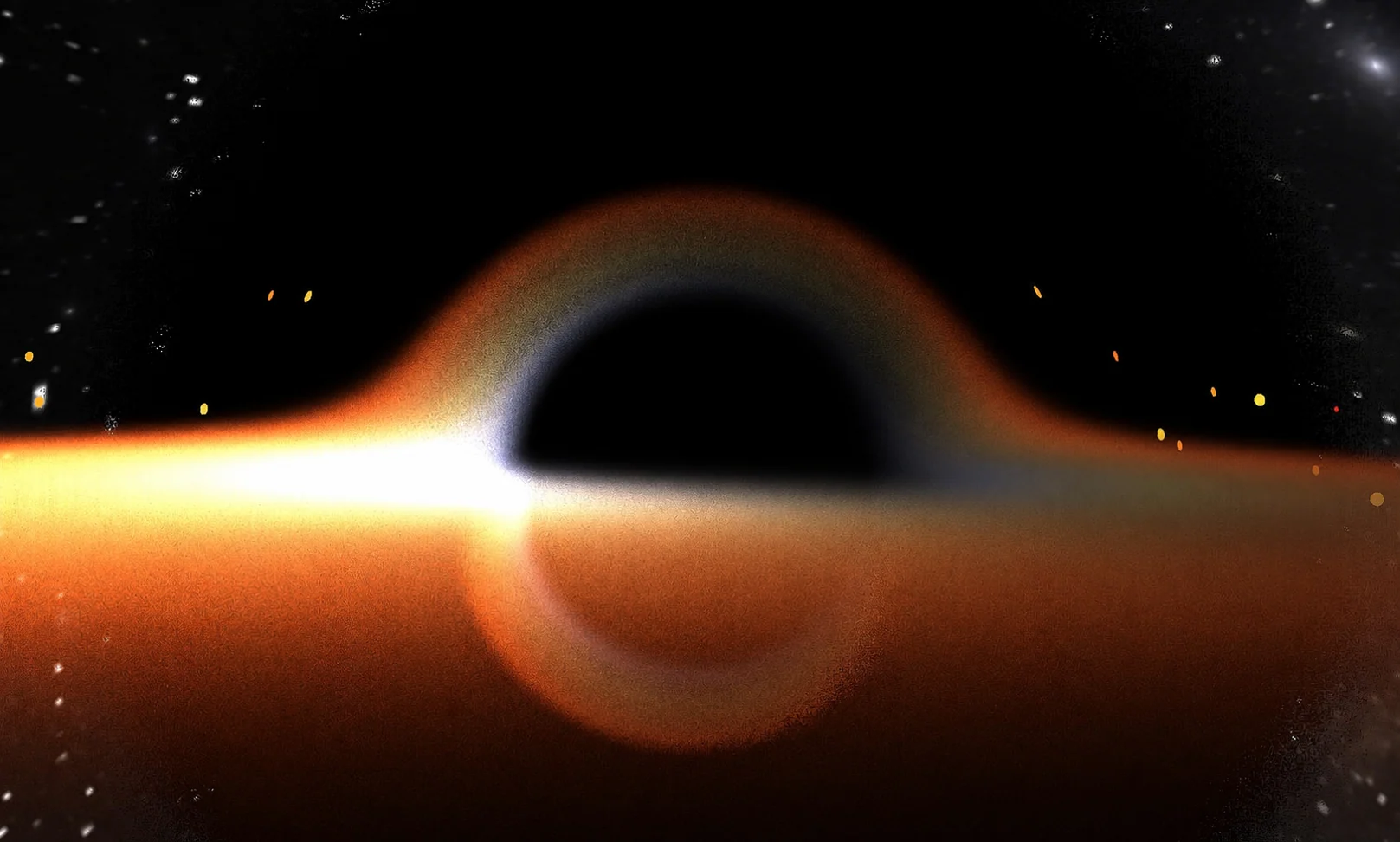
Numerical exploration of particle and photon motion in curved spacetime, focusing on geodesic integration in Schwarzschild spacetime and relativistic visualization.
Project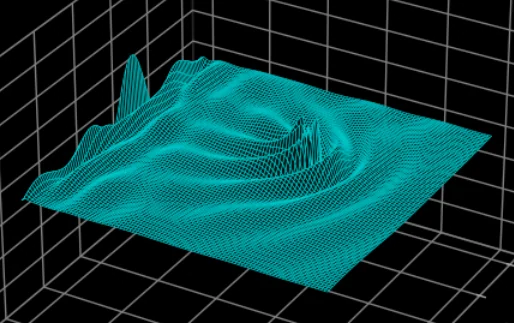
Jun – Aug 2026Archived
A computational physics laboratory exploring numerical methods for partial differential equations alongside learned surrogate solvers, including experiments on long-horizon rollout and generalization.
Project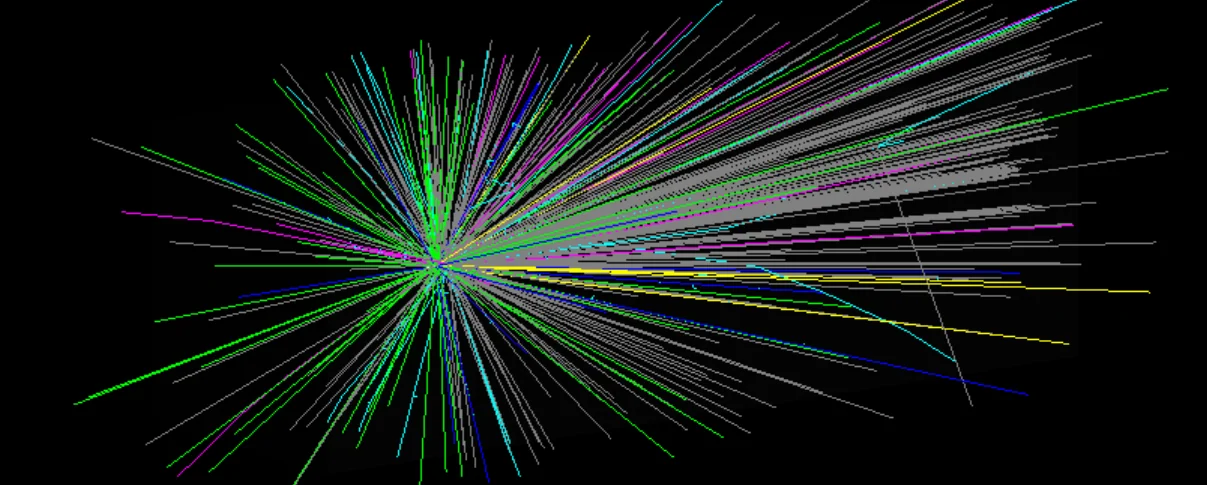
Jun – Aug 2026Archived
A computational framework coupling Geant4 particle-interaction simulation with Xsuite beam transport.
ProjectA small-scale reproduction study testing whether narrow fine-tuning induces broader behavioral changes. The intended behavior did not emerge at the tested model scale.
2026ARCHIVED REPRODUCTION STUDY
Optimization algorithms derived from their mathematical formulations and implemented in NumPy, starting with the simplex method for linear programming and its basis changes, pivots, and reduced costs.
2026IN PROGRESS
A Python orchestration layer for Geant4 simulation workflows, enabling reproducible experiment configuration, automated execution, and structured data collection.
Jul 2026ARCHIVED
An earlier physics-first environment for quantum Hamiltonian simulation and variational algorithms.
July 2026ARCHIVED
Controlled 2D inverse-problem experiments comparing direct, Fourier, and matrix-free iterative reconstruction methods, with a focus on convolution operators and boundary-model mismatch.
Aug 2026EXPLORATION
An exploratory notebook-based pipeline for detecting and characterizing transit signals in TESS photometric data.
July 2026EXPLORATION
Notes and essays on
things I find interesting.
An introduction to the 1+1D Schwinger model, staggered fermions, lattice gauge fields, Gauss’s law, and Hamiltonian dynamics.
An exploration of higher derivatives through local polynomial approximations, Taylor expansion, and geometric intuition.
A retrospective on building Tempest, a computational physics sandbox for PDE solvers, numerical validation, and scientific machine learning.